
Pressure Unit Convert App Using Tkinter in Python with Source Code
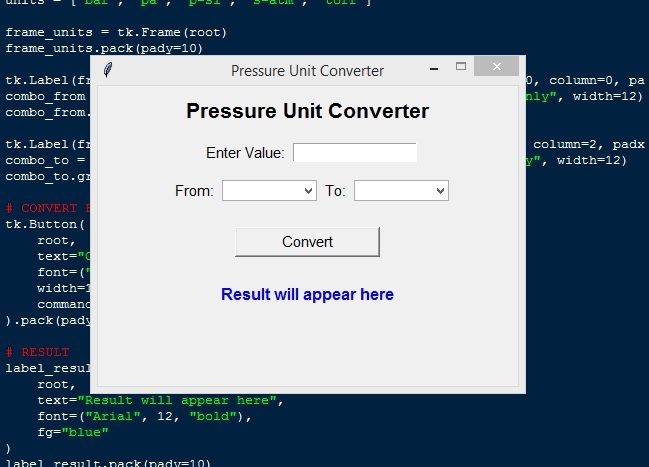
The Pressure Unit Convert App is an interactive desktop application built entirely with Python using the Tkinter library. This simple Tkinter project allows users to convert pressure unit measurements. The Pressure Unit Convert App Using Tkinter in Python includes easy-to-use tools for pressure unit conversion. This project is an excellent way to practice and reinforce essential programming concepts, making it a valuable exercise for enhancing your Python skills in application development.
The Pressure Unit Convert App Using Tkinter in Python with Source Code is free to be downloaded just read the content below for more info. This application is for educational purpose only.
Pressure Unit Convert App Using Tkinter in Python with Source Code Basic Information
- Language used: Python
- Coding Tool used: Built-in Python IDLE
- Type: Desktop Application
- Database used: None
About Pressure Unit Convert App
The Pressure Unit Convert App Using Tkinter is a user-friendly desktop application developed using Python and the Tkinter library, designed to simplify the process of converting pressure measurements between various units. The application allows users to input a pressure value, choose the desired input and output units, and instantly receive accurate conversion results. With its clean and intuitive graphical interface, the app ensures ease of use for students, engineers, and beginners alike. This project is especially useful for reinforcing fundamental programming concepts such as functions, dictionaries, conditional logic, and event handling in Tkinter, while also demonstrating how real-world scientific calculations can be implemented in a practical GUI-based Python application.
Pressure Unit Convert App Using Tkinter in Python with Source Code Features
- User-Friendly GUI Interface
- Built using Tkinter for a simple and clean desktop interface.
- Easy-to-use layout with input field, unit selectors, and result display.
- Clearly labeled components for better usability.
- Pressure Unit Conversion Functionality
- Converts pressure values between multiple units.
- Uses Pascal as the base unit for accurate conversions.
- Provides instant and precise conversion results.
- Interactive Controls
- Dropdown menus to select input and output pressure units.
- Button to perform conversion with a single click.
- Clear or reset option to start a new conversion.
- Real-Time Result Display
- Converted value is displayed clearly in the output area.
- Automatically updates after each conversion.
- Supports decimal precision for accurate scientific calculations.
Sample Application Screenshot:
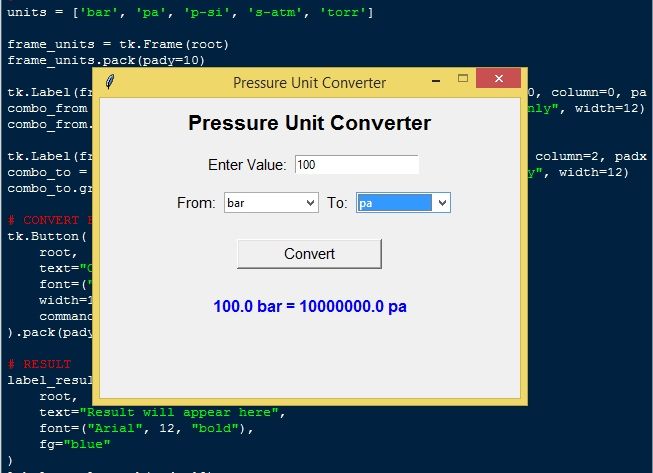
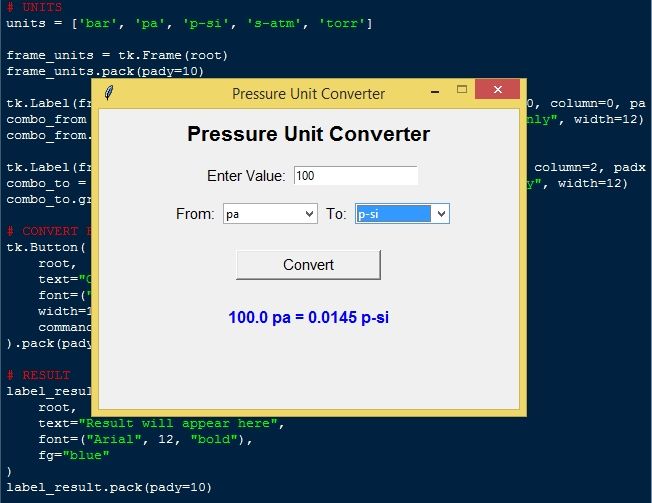
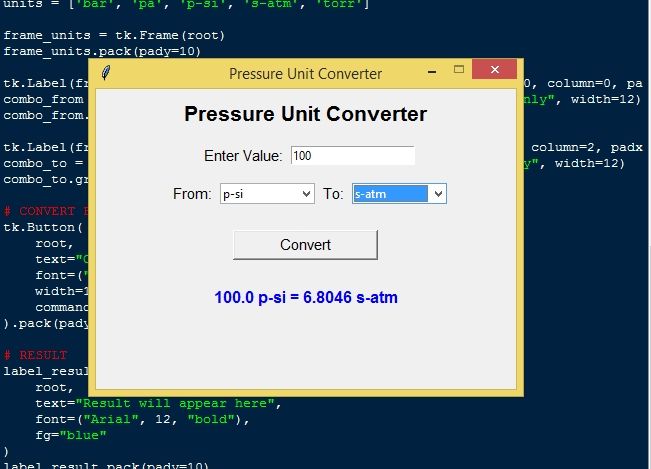
Pressure Unit Convert App Using Tkinter in Python with Source Code Installation Guide
- First you need to download & install the Python IDLE's, here's the link "https://www.python.org/downloads/".
- Download the source code in this site.
- Locate and Extract the zip file.
- Open the extracted folder
- Locate the py file.
- Then open the file via python IDLE or any IDE that supports python language.
- Run the py file to launch the program.
That's all, The Pressure Unit Convert App was created fully functional using Python language. I hope that this project can help you to what you are looking for. For more projects and tutorials please kindly visit this site. Enjoy Coding!
The Pressure Unit Convert App Using Tkinter in Python with Source Code is ready to be downloaded just kindly click the download button below.
Related Projects & Tutorials
Pressure Unit Convert AppNote: Due to the size or complexity of this submission, the author has submitted it as a .zip file to shorten your download time. After downloading it, you will need a program like Winzip to decompress it.
Virus note: All files are scanned once-a-day by SourceCodester.com for viruses, but new viruses come out every day, so no prevention program can catch 100% of them.
FOR YOUR OWN SAFETY, PLEASE:
1. Re-scan downloaded files using your personal virus checker before using it.
2. NEVER, EVER run compiled files (.exe's, .ocx's, .dll's etc.)--only run source code.