Search
Meta Muse Ember, Claude Fable 5.2 in Copilot, Laravel and undici Fixes: Developer News for November 10, 2026
PHP File Upload Tutorial: Secure Image Upload with Validation, MIME Type Check and Multiple Files
Profile pictures, product photos, payment receipts, scanned IDs: sooner or later almost every PHP project needs a file upload form. It is also one of the easiest places to open a serious security hole. A careless upload script lets someone send a .php file instead of a photo, open it in the browser, and run any command they like on your server.
Java Exception Handling Tutorial: try-catch-finally, try-with-resources and Custom Exceptions
Sooner or later every Java program meets bad input, a missing file or a network that is down. If you do not plan for it, your program crashes with a long red stack trace, and in a capstone defense that usually happens at the worst possible moment. Exception handling is how Java lets you catch those problems, react to them, and keep the program running or fail with a clear message.
How to Name Variables and Functions: Clean Code Naming Tips with Python, JavaScript and PHP Examples
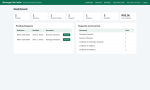
Barangay Document Request System using Python Flask and SQLite with Source Code
- Read more about Barangay Document Request System using Python Flask and SQLite with Source Code
- Log in or register to post comments
- 28 views
Node.js Security Releases, WordPress Upgrade RCE Under Attack, Next.js Cache Leaks: Developer News for November 9, 2026
PHP password_hash and password_verify Tutorial: Secure Registration and Login with PDO and MySQL
Almost every PHP project needs a login page: a capstone system, an inventory app, a school portal, an admin panel. And almost every beginner tutorial from ten years ago still saves passwords with md5(). That is the one part of a login system you really cannot get wrong, because if your database ever leaks, weak password hashes turn into real passwords within minutes.
SQL GROUP BY and HAVING Tutorial: COUNT, SUM, AVG, ROLLUP and Pivot Reports in MySQL
Totals, averages and counts are the heart of almost every report: sales per branch, students per course, orders per day, the best-selling product this week. In SQL, all of these come from one clause: GROUP BY. Paired with aggregate functions like COUNT, SUM and AVG, and filtered with HAVING, it turns thousands of rows into a short summary you can show on a dashboard.
- Read more about SQL GROUP BY and HAVING Tutorial: COUNT, SUM, AVG, ROLLUP and Pivot Reports in MySQL
- Log in or register to post comments
- 19 views