
How to Reverse a Stack using Recursion Method in Python
In this tutorial, we will learn how to program “How to Reverse a Stack using Recursion Method in Python.” The main objective is to reverse the elements of a stack by applying a recursive approach instead of using iterative methods or additional data structures. This tutorial will guide you step by step through the logic and implementation of stack reversal using recursion, helping you understand how recursive function calls work in practice. By the end of this tutorial, you will have a solid understanding of how to reverse a stack effectively in Python, strengthening your problem-solving abilities and enhancing your overall coding skills.
This topic is straightforward and easy to understand. Simply follow the instructions provided, and you will complete it with ease. The program will guide you step by step through the process of reversing a stack using recursion, helping you clearly understand how recursive calls manipulate stack elements. So, let’s dive into the coding process and start implementing the solution!
Getting Started:
First you will have to download & install the Python IDLE's, here's the link for the Integrated Development And Learning Environment for Python https://www.python.org/downloads/.
Creating Main Function
This is the main function of the application. The following code will display a simple GUI in terminal console that will display program. To do this, simply copy and paste these blocks of code into the IDLE text editor.- class Stack:
- def __init__(self):
- self.items = []
- def is_empty(self):
- return self.items == []
- def push(self, data):
- self.items.append(data)
- def pop(self):
- return self.items.pop()
- def display(self):
- for data in reversed(self.items):
- print(data)
- def insert_at_bottom(s, data):
- if s.is_empty():
- s.push(data)
- else:
- temp = s.pop()
- insert_at_bottom(s, data)
- s.push(temp)
- def reverse_stack(s):
- if not s.is_empty():
- temp = s.pop()
- reverse_stack(s)
- insert_at_bottom(s, temp)
- # MAIN LOOP
- while True:
- print("\n=============== Reverse a Stack using Recursion ===============\n")
- s = Stack()
- data_list = input('Please enter the elements to push: ').split()
- for data in data_list:
- s.push(int(data))
- print('\nThe stack:')
- s.display()
- reverse_stack(s)
- print('\nAfter reversing:')
- s.display()
- opt = input("\nDo you want to try again? (yes/no): ").strip().lower()
- if opt == "no":
- print("Exiting program...")
- break
- elif opt != "yes":
- print("Invalid choice. Exiting program...")
- break
This program shows how to reverse a stack using recursion without using any extra data structures. It defines a simple `Stack` class with basic operations such as push, pop, check if empty, and display. The core logic is implemented using two recursive functions: `reverse_stack`, which removes elements from the stack one by one, and `insert_at_bottom`, which places each removed element at the bottom of the stack as the recursion unwinds. By repeatedly popping elements and reinserting them at the bottom, the stack order is completely reversed. The main loop allows the user to input stack elements, displays the original stack, applies the recursive reversal, and then displays the reversed stack, repeating the process until the user chooses to exit.
Output:
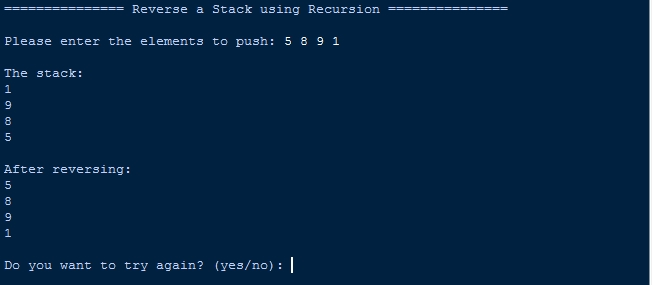
There you have it we successfully created How to Reverse a Stack using Recursion in Python. I hope that this simple tutorial help you to what you are looking for. For more updates and tutorials just kindly visit this site. Enjoy Coding!
More Tutorials for Python Language