
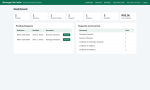
Barangay Document Request System using Python Flask and SQLite with Source Code
- Read more about Barangay Document Request System using Python Flask and SQLite with Source Code
- Log in or register to post comments
- 11 views
Almost every PHP project needs a login page: a capstone system, an inventory app, a school portal, an admin panel. And almost every beginner tutorial from ten years ago still saves passwords with md5(). That is the one part of a login system you really cannot get wrong, because if your database ever leaks, weak password hashes turn into real passwords within minutes.
Totals, averages and counts are the heart of almost every report: sales per branch, students per course, orders per day, the best-selling product this week. In SQL, all of these come from one clause: GROUP BY. Paired with aggregate functions like COUNT, SUM and AVG, and filtered with HAVING, it turns thousands of rows into a short summary you can show on a dashboard.
JSON is everywhere in modern programming. REST APIs send it, JavaScript front ends expect it, configuration files are written in it, and many capstone projects store small amounts of data in a .json file before they move to a real database. If you write Python, sooner or later you will need to turn a dictionary into JSON or read a JSON response back into Python.
Arrays are the default list type in JavaScript, and most of the day-to-day work you do with them — transform items, keep only some of them, compute a total, find the first match — is easier with the built-in array methods than with handwritten for loops. Once you are comfortable with map, filter, reduce, find, some and every, reading other people's code (and writing your own API responses) gets much faster.