
Weather App Using Tkinter in Python with Source Code
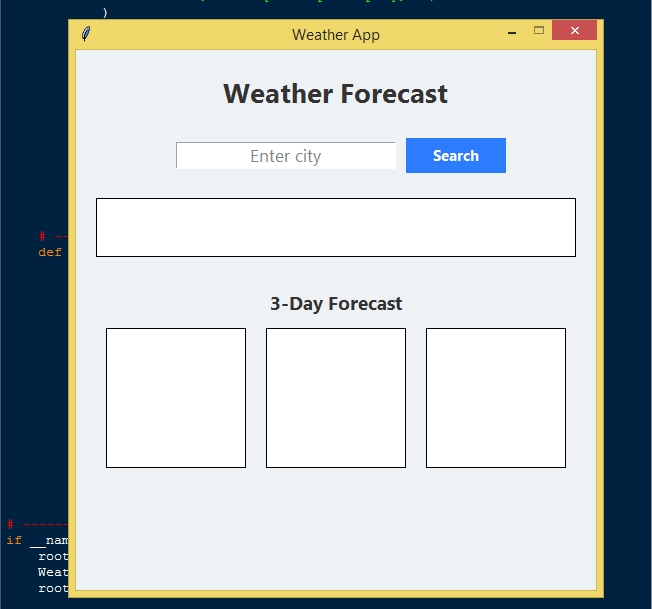
The Weather App is an interactive desktop application built entirely with Python using the Tkinter library. The application is simple and allows the user to search for a city and check its weather conditions. The Weather App Using Tkinter includes tools that let you easily view the forecast for any city. This project is an excellent way to practice and reinforce essential programming concepts, making it a valuable exercise for enhancing your Python skills in application development.
The Weather App Using Tkinter in Python with Source Code is free to be downloaded just read the content below for more info. This application is for educational purpose only.
Weather App Using Tkinter in Python with Source Code Basic Information
- Language used: Python
- Coding Tool used: Built-in Python IDLE
- Type: Desktop Application
- Database used: None
About Weather App
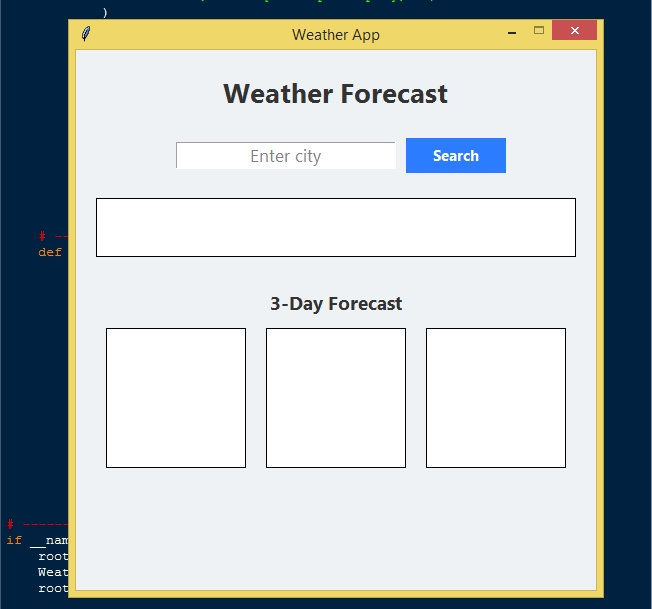
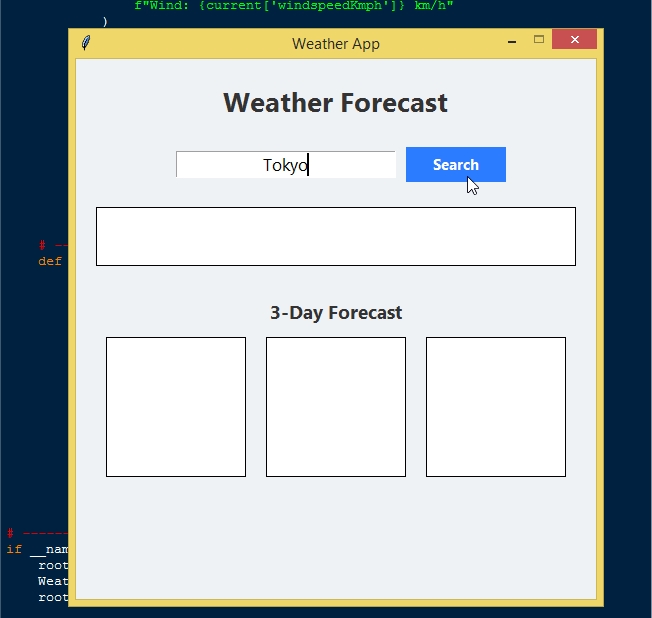
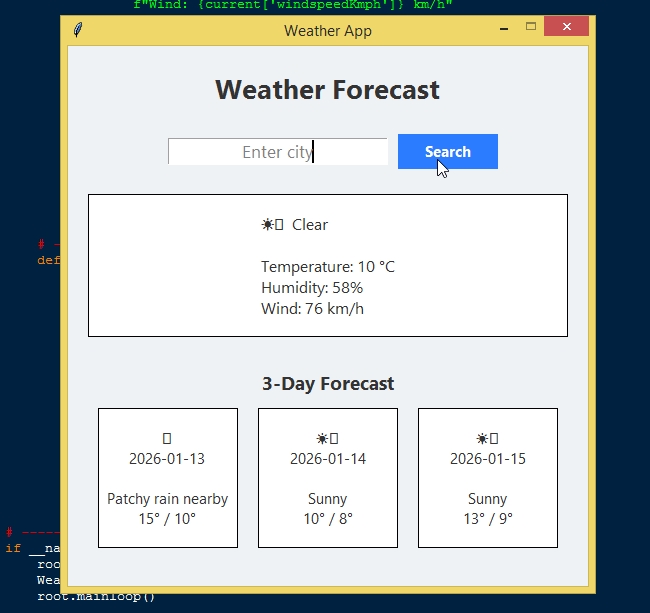
The Weather App Using Tkinter in Python is a sleek and interactive desktop application designed to provide users with accurate and up-to-date weather information. Developed entirely using Python’s Tkinter library, the app allows users to search for any city and instantly view current weather conditions, including temperature, humidity, and general weather status, along with a detailed 3-day forecast. The app fetches data directly from the web without relying on external APIs, making it simple and easy to use. Its user-friendly interface features a clean layout, an input field with a placeholder that clears automatically after each search, and well-organized sections for current weather and upcoming forecasts. This project not only showcases the power of Python in building functional GUI applications but also emphasizes practicality and usability, making it an excellent example for learning how to integrate web data into desktop applications while creating a professional and polished user experience.
Speed Conversion App Using Tkinter in Python with Source Code Features
- User-Friendly GUI Interface
- Built with Tkinter for a clean and intuitive layout.
- Organized sections for city input, weather display, and additional information.
- Clear labels, icons, and dynamic updates for ease of use.
- Weather Data Retrieval
- Fetches current weather data for a specified city.
- Displays essential information
- Real-Time Updates
- Updates weather data **instantly** when the user enters a new city.
- Can be extended to **refresh automatically** at set intervals.
- Input and Search Functionality
- Users can enter a city name to get its weather information.
- Validates input to prevent invalid or empty entries.
- Optional dropdown or autocomplete for commonly searched cities.
Sample Application Screenshot:
Weather App Using Tkinter in Python with Source Code Installation Guide
- First you need to download & install the Python IDLE's, here's the link "https://www.python.org/downloads/".
- Download the source code in this site.
- Locate and Extract the zip file.
- Open the extracted folder
- Locate the py file.
- Then open the file via python IDLE or any IDE that supports python language.
- Run the py file to launch the program.
That's all, The Weather App was created fully functional using Python language. I hope that this project can help you to what you are looking for. For more projects and tutorials please kindly visit this site. Enjoy Coding!
The Weather App Using Tkinter in Python with Source Code is ready to be downloaded just kindly click the download button below.
Related Projects & Tutorials
Weather AppNote: Due to the size or complexity of this submission, the author has submitted it as a .zip file to shorten your download time. After downloading it, you will need a program like Winzip to decompress it.
Virus note: All files are scanned once-a-day by SourceCodester.com for viruses, but new viruses come out every day, so no prevention program can catch 100% of them.
FOR YOUR OWN SAFETY, PLEASE:
1. Re-scan downloaded files using your personal virus checker before using it.
2. NEVER, EVER run compiled files (.exe's, .ocx's, .dll's etc.)--only run source code.